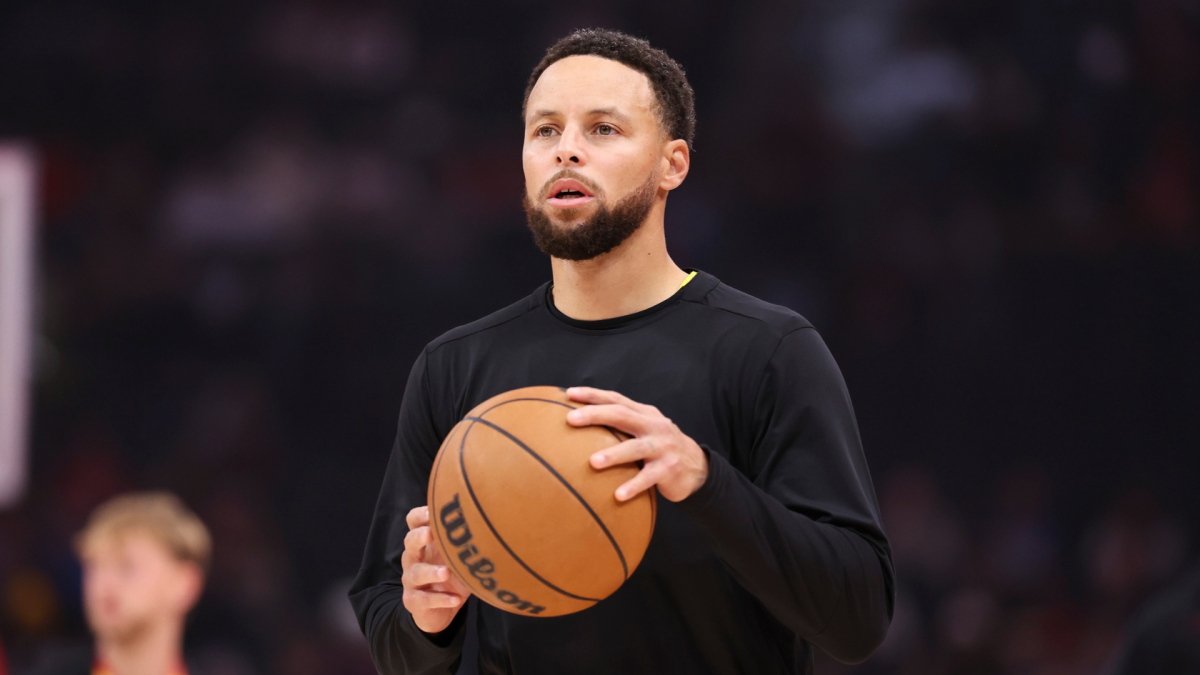
The Golden State Warriors have lost four consecutive games by 20-plus points since Stephen Curry suffered an oblique injury, a franchise low not seen since February 1998. The total margin of 109 points over those four games surpasses the 104-point margin of that 1997-98 team, which finished with just 19 wins. In stark contrast, the Warriors had won eight straight before Curry's injury, including victories over the Denver Nuggets, Minnesota Timberwolves, Los Angeles Lakers, Miami Heat, and Orlando Magic.
The statistical divergence is extreme. During the eight-game win streak with Curry, Golden State posted an offensive rating of 122.2 (1st in the league), a net rating of +16.4 (1st), an effective field-goal percentage of 60.1% (1st), and a true shooting percentage of 64.0% (1st). In the four games without him, those numbers plummeted to 95.1 (30th), -27.4 (30th), 43.4% (30th), and 48.1% (30th), respectively. The Warriors have also been held under 100 points in all four losses, a combination of offensive futility unmatched by any other team this century.
While the eight-game streak included a win over the Los Angeles Clippers without Curry (rookie Yaxel Lendeborg scored 37 points), and the Warriors looked competitive in a six-minute Curry appearance against the Houston Rockets, the broader pattern holds. Golden State's first three games of the season, all with Curry, were also poor, but the team's identity remains inextricably tied to his presence.
Steve Kerr's coaching record underscores the dependency. Since 2014, Kerr is 528-218 (70.6%) with Curry and 88-142 (38.3%) without him. Even excluding the 2019-20 season when Curry played only five games, Kerr is 74-96 (43.5%) without his star. "If I didn't have Steph, I would've been like every other NBA coach and lasted a few years [with the Warriors] and then gone and coached somewhere else," Kerr has said.
This season, the Warriors' effective field-goal percentage is 59.6% with Curry on the floor (which would lead the league) and 49.1% with him off (which would rank last). Their offensive rating in games Curry has missed is 103.8, the second-worst in the league. Per Cleaning The Glass, Golden State is 26.3 points per 100 possessions better with Curry on the court. For comparison, the Lakers drop 25.5 points per 100 possessions when Luka Dončić sits, and the Spurs drop 37.8 when Victor Wembanyama sits.
Dončić and Wembanyama are MVP-caliber players, but the Lakers and Spurs have more functional supporting casts. The Warriors have no alternative shot creation or gravity without Curry. After a 38-point loss to the San Antonio Spurs, Lendeborg admitted, "it felt helpless out there."
Curry's individual production is elite, but his exponential impact — elevating everyone around him — sets him apart. The Warriors' abrupt collapse without him makes a compelling case that, at 38 and in his 18th season, Stephen Curry remains the most valuable player in the NBA, regardless of whether he meets the 65-game threshold to win the award.


