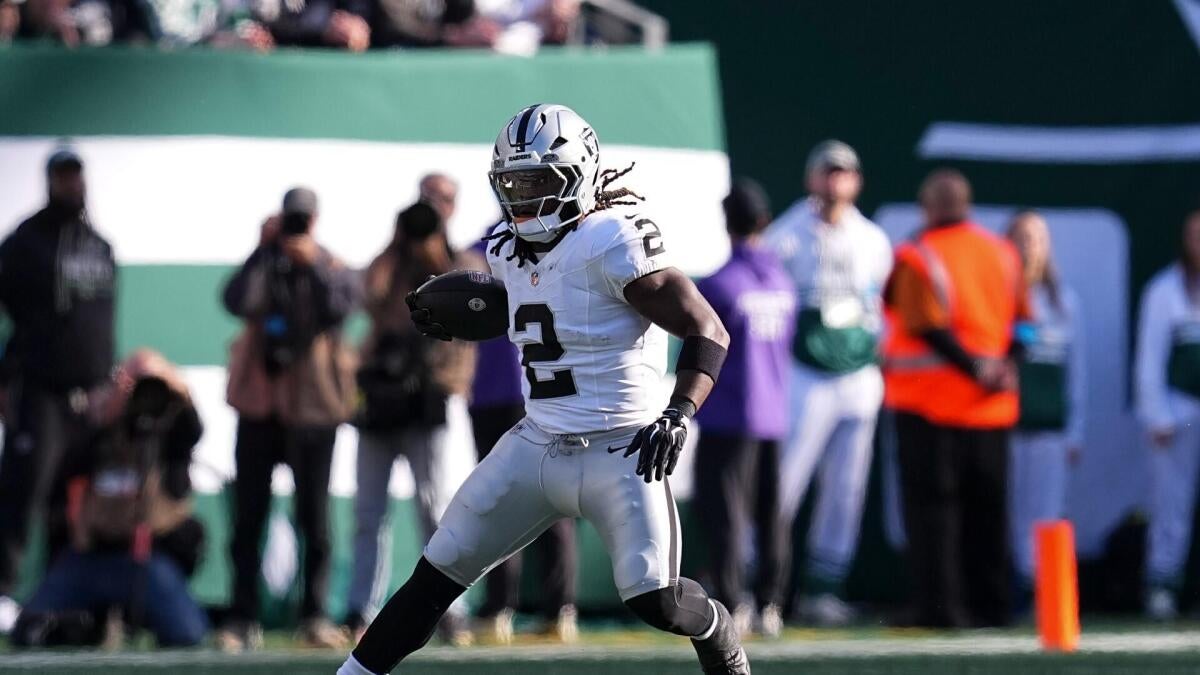
The Las Vegas Raiders selected Ashton Jeanty with the sixth overall pick in the 2025 NFL Draft, believing he could transform their running game. Twenty-five games later, the team is leaning on fourth-round rookie Mike Washington Jr. instead. In Week 8, Jeanty had just two carries for nine yards in a win over the New York Jets, while Washington carried 25 times for 83 yards. Jeanty's workload has declined each week, from 23 carries in Week 1 to two against the Jets. According to ESPN's Dan Graziano, the Raiders initially thought a preseason ankle injury contributed to Jeanty's struggles, but he has been healthy enough to practice and play. The coaching staff hopes the reduced role serves as a wake-up call and is prepared to keep giving Washington more carries if Jeanty does not respond. First-year head coach Klint Kubiak was not with the organization when Jeanty was drafted and does not feel obligated to play him.
Cardinals' High Pick Also Facing Setbacks
In Arizona, the Cardinals chose Jeremiyah Love third overall in April, making him the highest-drafted running back since Saquon Barkley went second in 2018. Love has managed 268 rushing yards and one touchdown in six games, averaging 3.5 yards per carry. He is now headed to injured reserve with a high ankle sprain, his second ankle injury of the season. Both players have dealt with injuries and inconsistent offensive line play, but the broader question remains: how exceptional must a running back be to justify a premium draft pick, and how often do teams actually get it right?
Historical Context and Opportunity Cost
The article examines the opportunity cost of drafting running backs early. After the Raiders took Jeanty sixth, the next three selections were right tackle Armand Membou, wide receiver Tetairoa McMillan, and left tackle Kelvin Banks Jr. Guard Tyler Booker went 12th. Later in the draft, running backs Quinshon Judkins (36th) and TreVeyon Henderson (38th) had productive rookie seasons, with Henderson finishing just 189 scrimmage yards behind Jeanty despite 86 fewer carries. Similarly, after Love went third, the Cardinals passed on wide receiver Carnell Tate, linebacker Arvell Reese, cornerback Mansoor Delane, and left tackle Spencer Fano, all positions of need.
Historical examples underscore the risk. In 2017, Jacksonville selected Leonard Fournette fourth overall; six picks later Kansas City drafted Patrick Mahomes. In 2018, the Giants took Barkley second overall while Josh Allen went seventh. In 2016, Dallas drafted Ezekiel Elliott fourth ahead of Jalen Ramsey, Ronnie Stanley, and DeForest Buckner; Derrick Henry went 45th. Even when the running back performs well, the pick may still be questioned if a franchise-changing player at another position was available.
Production Odds and Efficiency Comparisons
Analysis of 53 first-round running backs drafted from 2000 through 2023 shows that 54.7% reached at least 3,000 scrimmage yards in their first three seasons, but only 11 reached 4,000 and seven topped 5,000. That is roughly one in five reaching 4,000 yards and fewer than one in seven reaching 5,000. Meanwhile, later-round backs like Alvin Kamara (third round, 2017), Nick Chubb (second round, 2018), and De'Von Achane (third round, 2023) have produced comparable or better numbers at a fraction of the salary-cap cost.
However, the probability of finding such a gem in later rounds is low. A randomly selected Day 2 back from 2016-23 had only a 10% chance of reaching 70% of Bijan Robinson's first-three-year production, and a 20% chance for Jahmyr Gibbs. Efficiency metrics show little difference between first-round and Day 2 backs who earn significant playing time: first-rounders averaged 2.93 yards after contact per attempt versus 3.10 for Day 2 backs, and Pro Football Focus rushing grades were nearly identical (76.4 vs 76.7).
Impact on Overall Offense
Research on 48 first-round running back selections found little evidence that adding a first-round back consistently improved the overall offense, even after accounting for prior team performance. A running back cannot block for himself, fix the passing game, or compensate for poor quarterback play — a reality the Raiders are currently experiencing.
Financial Commitment and Expectations
Jeanty's four-year rookie contract is worth approximately $35.9 million (averaging nearly $9 million per year), while Love's is worth roughly $53 million ($13.3 million per year). Neither has yet delivered the impact their teams envisioned, though both have time to change that. The core issue: when a team spends a top-10 pick on a running back, it is not merely hoping for a good player; it is betting on a difference-maker who can elevate the entire offense, justifying the decision to pass on potentially elite tackles, pass rushers, or quarterbacks.